
The 7 Reasons Why it Works
Playguistics’ toolbox makes second language learning a certainty, because the included activities are designed to fully maximize the potential of both classroom learning and 1-on-1 tutoring.
Most English language learners need 25-45 hours of active speaking practice to move past the exhausting phase where every sentence requires conscious effort—and start speaking with comfort and confidence.
This is very difficult to provide in a classroom environment.
Students often spend lessons passively waiting for their turn to speak—or practicing rigid textbook dialogue scripts that become boring after a few repetitions.
And without sufficient repetitions of practice, English language learners get stuck — unable to move past tiring, conscious effort into natural, automatic speech.
Playguistics' collection of 100+ activities solves this problem.
Here are the 7 reasons why.
1. The Activities Make Practice Fun & Engaging
This allows learners to get the speaking practice they need without getting bored.
Hundreds of REPETITIONS of practice can be easily achieved EVERY class period with Playguistics activities.
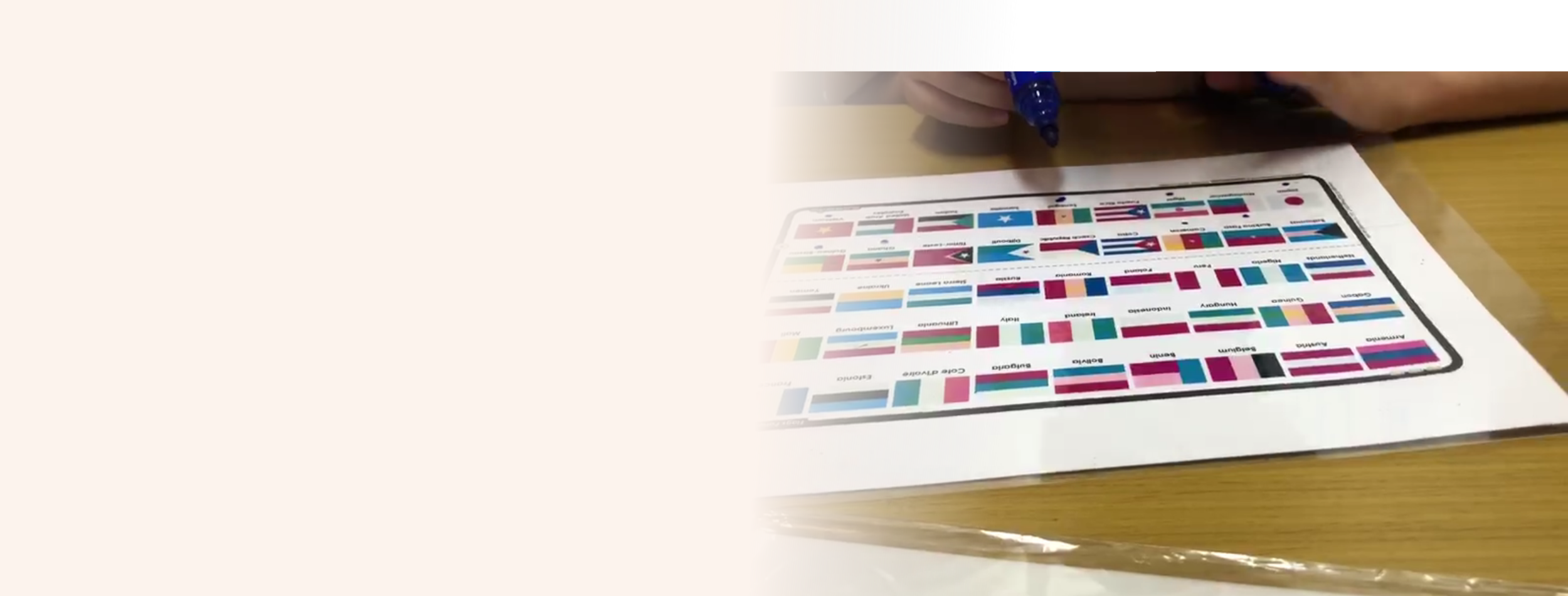
As this video demonstrates, students don’t need to be coaxed into practicing. They are not only EAGER to participate.
They are literally jumping for joy every time they go to collect a new Secret Card and repeat the practice activity.
The video isn’t from the first 5 minutes of the activity. It’s from 30 minutes in…and the students are still engaged, happy, and learning.
Bored minds turn off. Engaged minds learn.
2. Students Can’t Rely on Memorized Sentences
Forming new sentences every time drives authentic language learning.
If students can just memorize 10-20 sentences and pass the next unit exam, they will never actually become skilled at constructing new sentences of their own.
Playguistics activities make this IMPOSSIBLE.
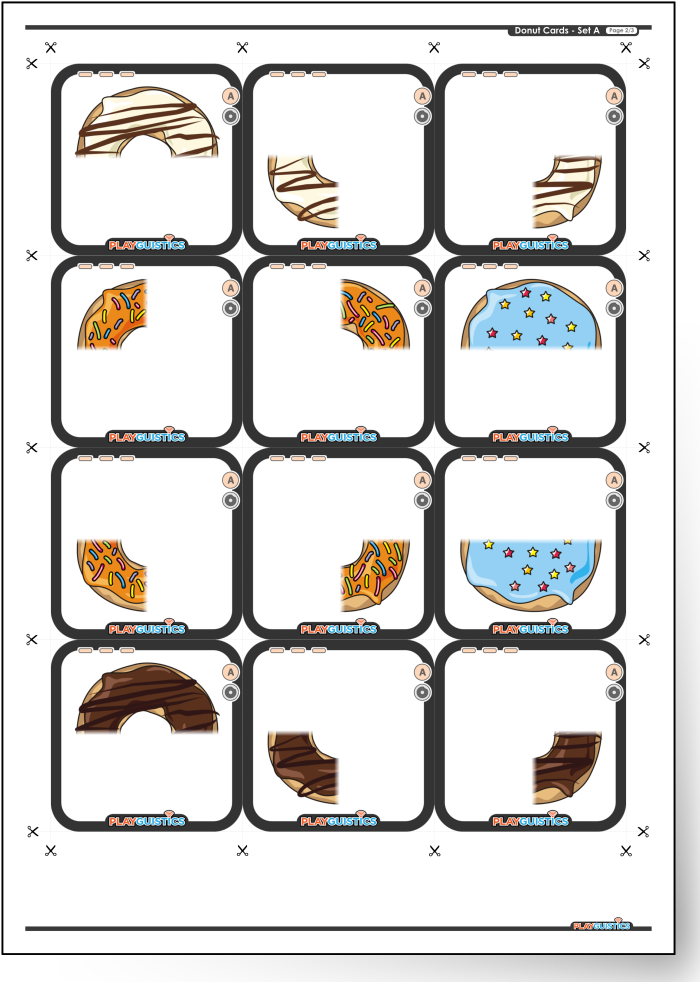
For example, the Donuts Group Activity shown in the above video, requires using a sentence pattern that, combined with the activity’s 22 Core Vocabulary Words, can create more than 500 unique sentences.
There just isn’t any way for students to memorize their way through it.
Students have no choice but to form unique sentences, one after another, until constructing them (and understanding them) becomes automatic.
The students won’t be learning to pass exams — they will be learning think in English.
3. Miscommunications Reveal the Lesson
Students learn best from understanding why a miscommunication happened.
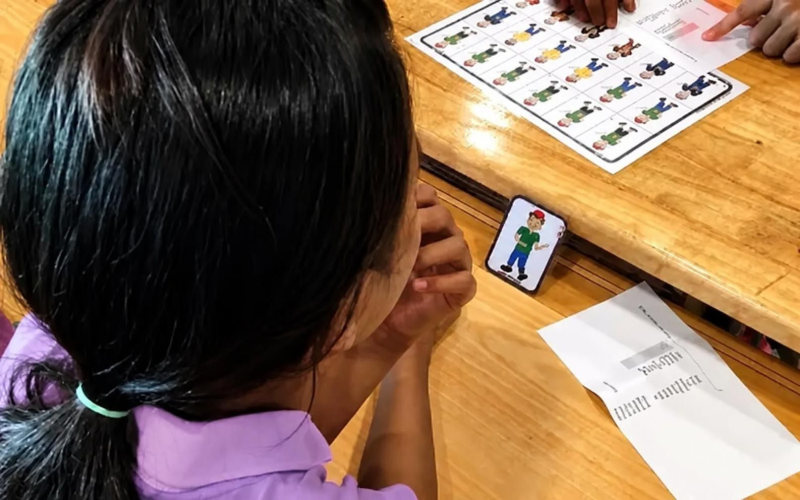
Something special happens in this video.
A mistake is made. The students pause to think about why.
Then one student figures it out.
He quickly explains to his classmates why the mistake had happened. They’d been saying something that didn’t mean what they thought it meant.
No need for a teacher to get involved.
The students examined the meaning of the English they had using, diagnosed what went wrong, and then corrected the mistake during their next attempt at the activity.
When the design of classroom learning tasks ensure that it is ALWAYS clear whether or not communication was accurately understood, students are empowered to recognize, examine, and fix their own mistakes.
4. Students Get Practice at the Level They Need
Not too easy + Not too difficult = Progress.
To learn to speak English confidently & usefully, learners MUST progress through 4 essential skill levels.
Basic sentence construction.

Detailed sentence construction.

Confident sentence pattern switching.

Full communication competence.

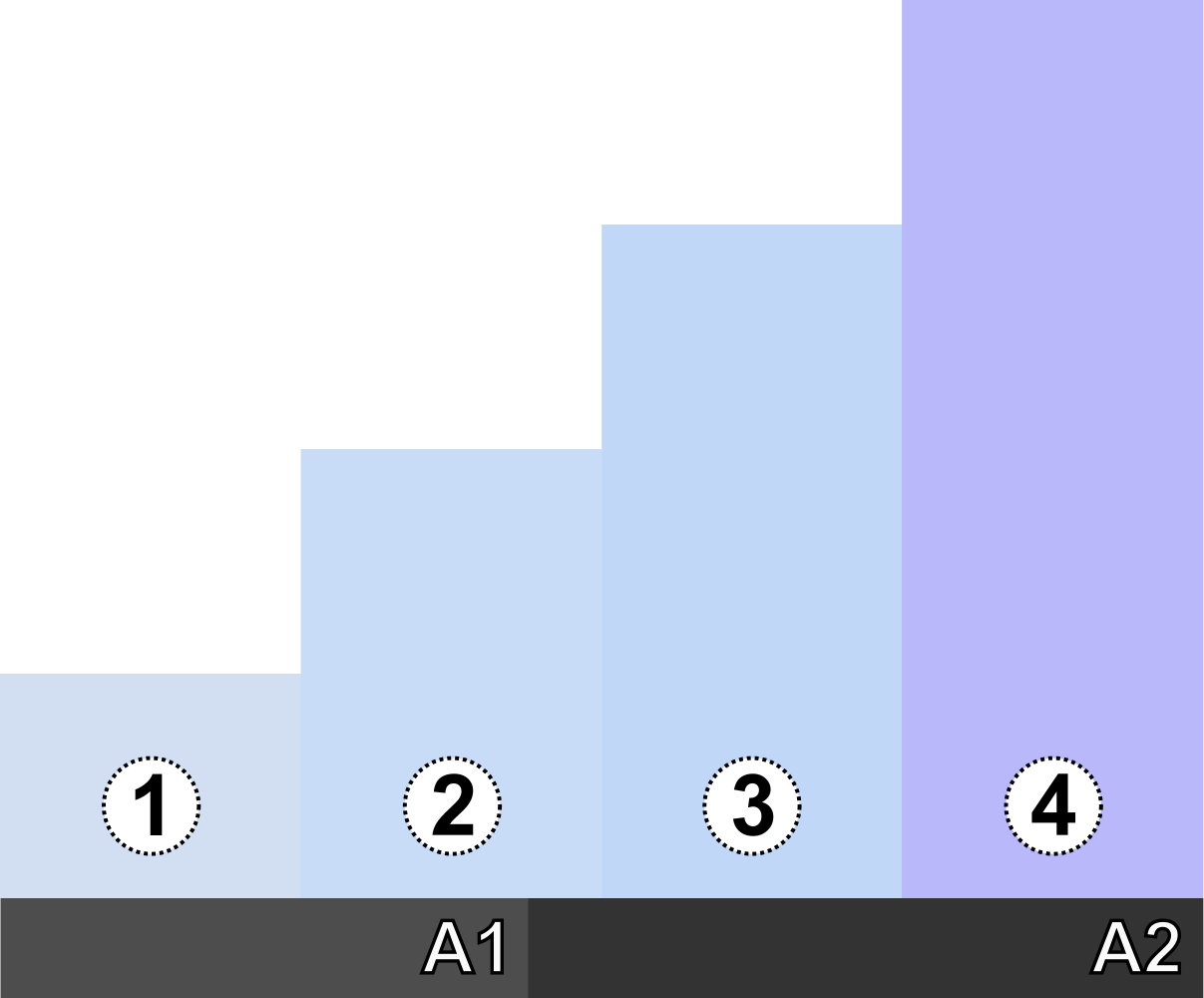
To achieve mastery of each of these 4 levels, learners need practice both speaking and understanding spoken sentences until they can handle sentences at that level with ease.
Playguistics’ task toolbox of over 100 speaking activities includes PLENTY of practice activities at each level.
5. Learning Can Be 100% Individualized
Yes. Everyone can learn at their own pace.
One of the biggest challenges ESL classrooms face is that different students learn at different speeds.
Move too fast, and some learners will be left behind.
Move slower, and the faster learners will get bored.
Go for a happy medium, and the pace will be too slow for some learners and too fast for other learners.
The Playguistics’ Solution:
Learning is done (mostly) in partner-pairs.
Therefore, learners can move on to the next activity as soon as they are able to demonstrate sufficient competency in the one they’ve been working on.
Any student not ready to move forward can CONTINUE PRACTICING the current activity in 2-person partner—pairs UNTIL they ARE ready.
A teacher simply needs to arrange a selection of the available Playguistics speaking activities into a logically scaffolded series of increasingly more challenging activities.
Students can move forward when they are actually READY to move forward — NOT when a schedule dictates it.
6. Class-Time is Always Maximized
Everyone can always be practicing at the same time.
Playguistics’ activities are specifically designed to allow every single student in a classroom to be able to simultaneously practice English at the right level for them.
No waiting their turn. No listening passively.
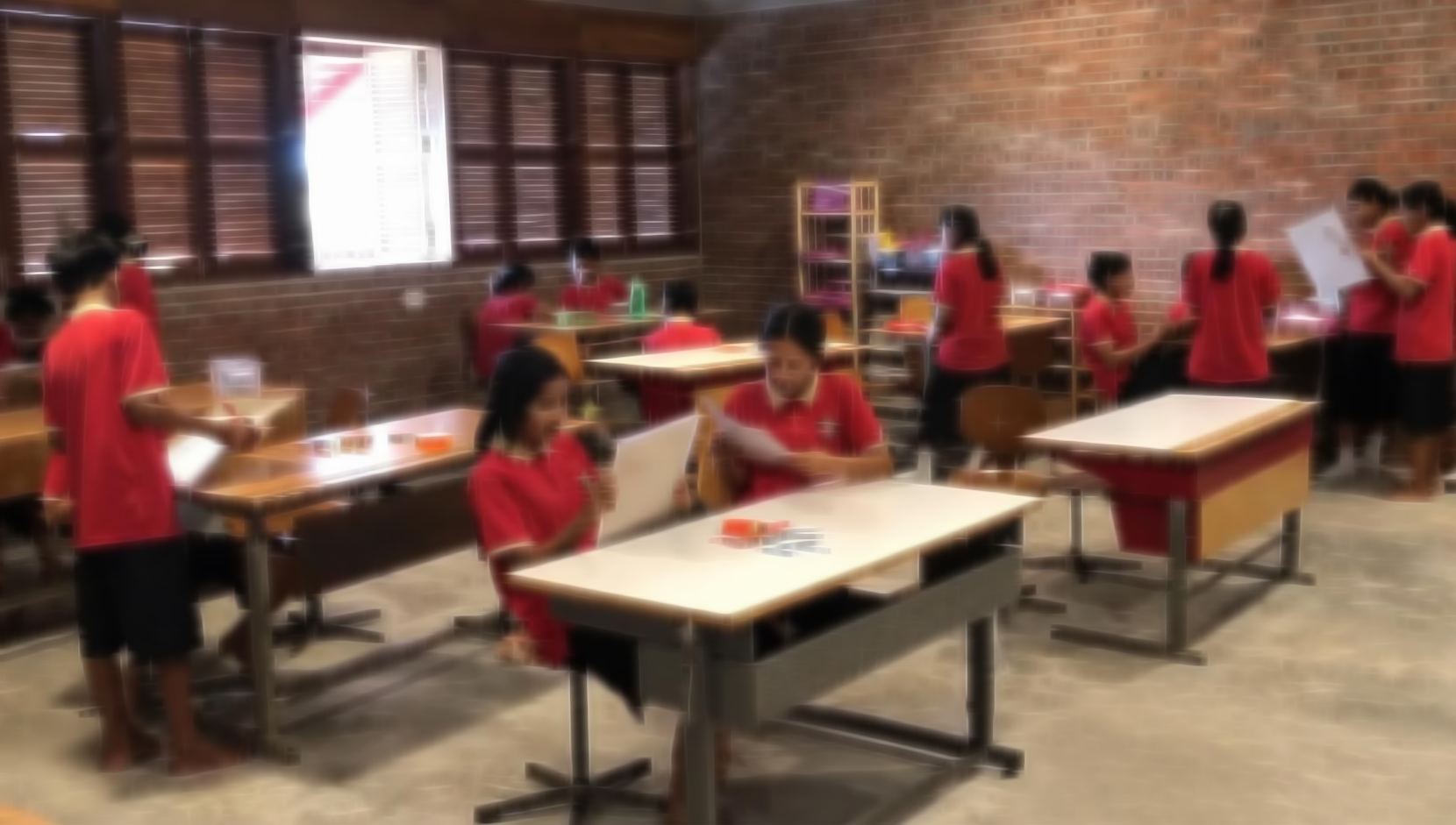
During a 30-75 minute lesson, every student in a classroom will get 100-400 repetitions of practice attempting to form & understand real sentences.
There’s simply no way to provide that amount of English-speaking practice to students without activities specifically designed for partner-pair and group practice.
This also frees up teachers to give some extra help to any students who need it, while the rest of the class is productively practicing.
7. A Certain Path to A2 Level Competency
The resource library’s diversity is a COMPLETE solution to building robust speaking skills.
Playguistics’ 100+ activities allow practice of almost 1500 words across 45 topics.
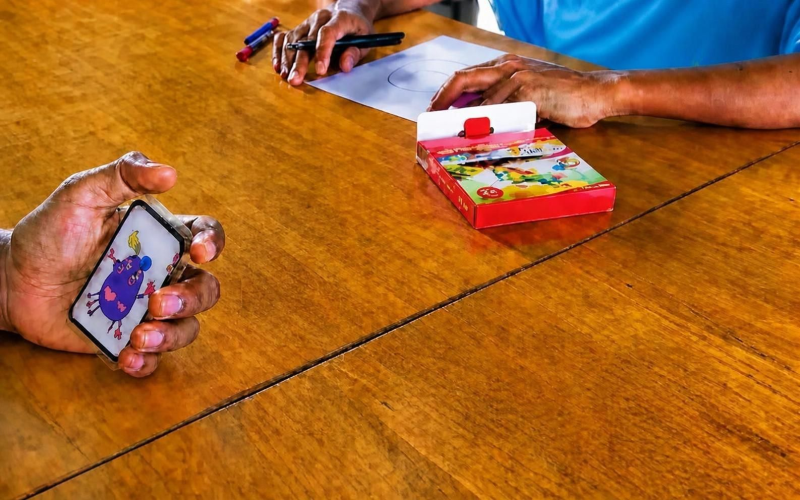
The large activity library means any student can build a highly functional vocabulary of well over 1000 words, simply from fun, engaging speaking practice.
By the time students have worked through 30-40 increasingly more challenging activities, they'll have internalized enough sentence patterns and vocabulary to communicate confidently at an A2 level.
This variety (in both vocabulary and sentence patterns) ensures that learners’ classroom practice earns them an incredibly SOLID FOUNDATION for B1-C2 level study."
Expected Learning Results
The use of Playguistics resources for classes where the students spend 90% of class-time practicing English either 1-on-1 with a partner or in groups, has been tested with children, teenagers, and adults.
After hundreds of hours of classroom testing, this is what we’ve learned…
Class-size does not matter. Larger classes often get the best results.
Even after 100+ classroom hours, students remain eager to learn through practice.
On average, students fully memorize 4-5 new words per hour of classroom learning.
Most students achieve an A1 level in English after 100-125 hours of class-time.
Most students will achieve an A2 level after 500-600 hours of class-time.
Changing to a different teacher does not disrupt the students’ progress.